Quorum Quenching: An Alternative to Antibiotics
Introduction: Antibiotic Resistance
Owing to the extensive development of drug resistance in pathogens against the available antibiotic arsenal, antimicrobial resistance is now an emerging major threat to public healthcare. Without urgent action, we are heading for a post-antibiotic era, in which common infections and minor injuries can once again kill. Scientists have been trying to find alternatives to antibiotics and one of the techniques in inhibiting Quorum Sensing(QS): a cell-to-cell communication in bacteria in which specific signals are activated to coordinate pathogenic behaviours and help bacteria acclimatize to the disadvantage.
Quorum Sensing(QS) in Virulent Bacteria
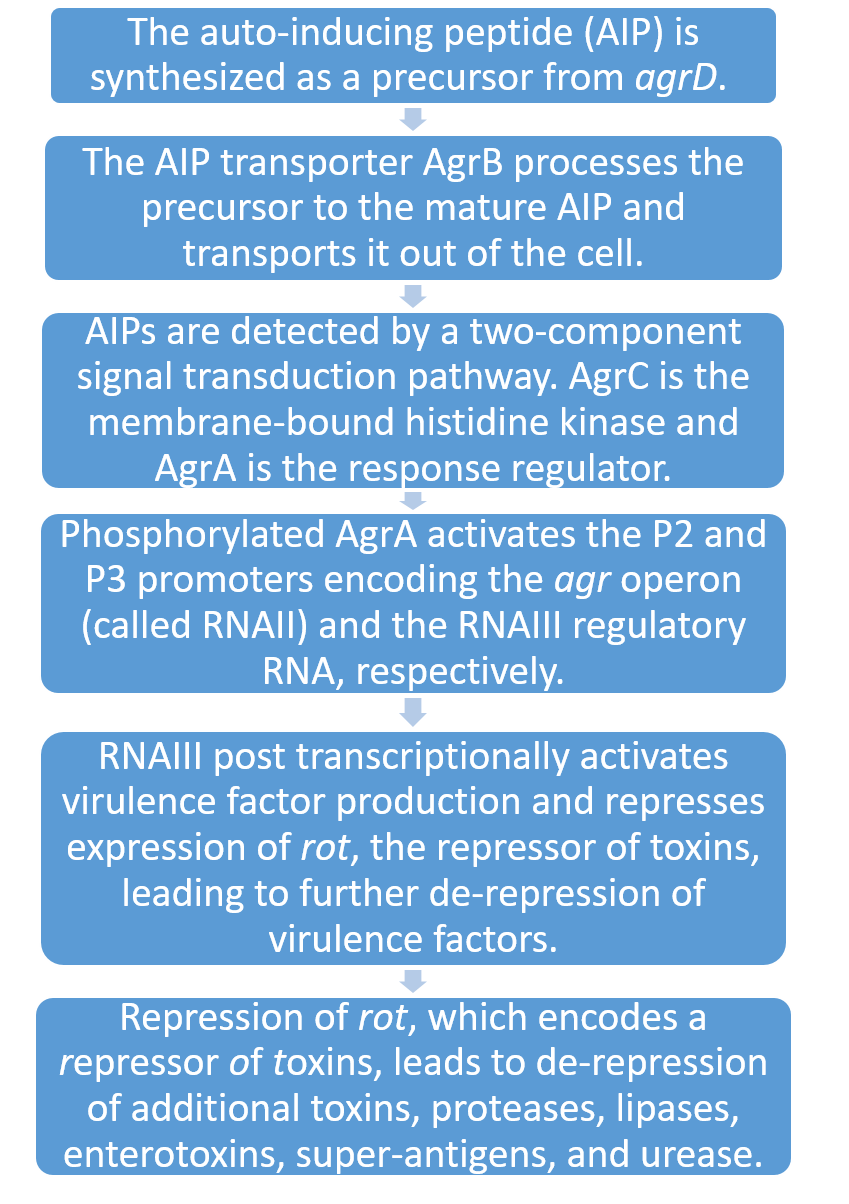
QS in virulent bacteria relies on principles common to all QS circuits: production, detection, and response to AIs. The AIs are oligopeptides autoinducing peptides (AIPs) that are detected by membrane bound two component signal transduction systems.
Strategies for Quorum Quenching
There are current studies that enumerate various ways to disrupt quorum sensing at its different steps.
One of them is, at HCD, the AIP concentration is high and thus, if AIP is degraded then the threshold concentration won’t be achieved and thus signal receptor is interfered.
Another method is to interfere with the AIP production. Inhibiting the synthesis of AHLs is a direct strategy to reduce AHL-mediated virulence factors and prevent pathological damage. Studies have revealed that the sinefungin, butyryl-SAM, and S-adenosylhomocysteine can attenuate the secretion of QS-mediated virulence factors and prevent the bacterial infection by inhibiting the AHLs synthesis in Pseudomonas aeruginosa.

Approaching Future
In conclusion, there has been an explosion of activity on quorum quenching and the field continues to expand rapidly. Combining use of anti-QS agents with conventional antibiotics can significantly improve the efficacy of therapeutic drugs and decrease the cost of human healthcare and is likely to be the main application method of anti-QS agents for bacterial diseases treatment in the future.
Jayshree Agrawal
Comments
Post a Comment